Iterating on the Zalando Assistant prompt to improve personalisation
For the past few years, I have collaborated with designers, product managers, product analysts, applied scientists and engineers on the Zalando Assistant (ZA.) The assistant provides style advice and finds customers items from various categories. However, these conversations largely lacked customer context. Although we did have customer data for a limited period, we were not able to leverage this in our conversations. In 2026, I was the Design Prime on a project to bring aspects of context and personalisation into ZA.
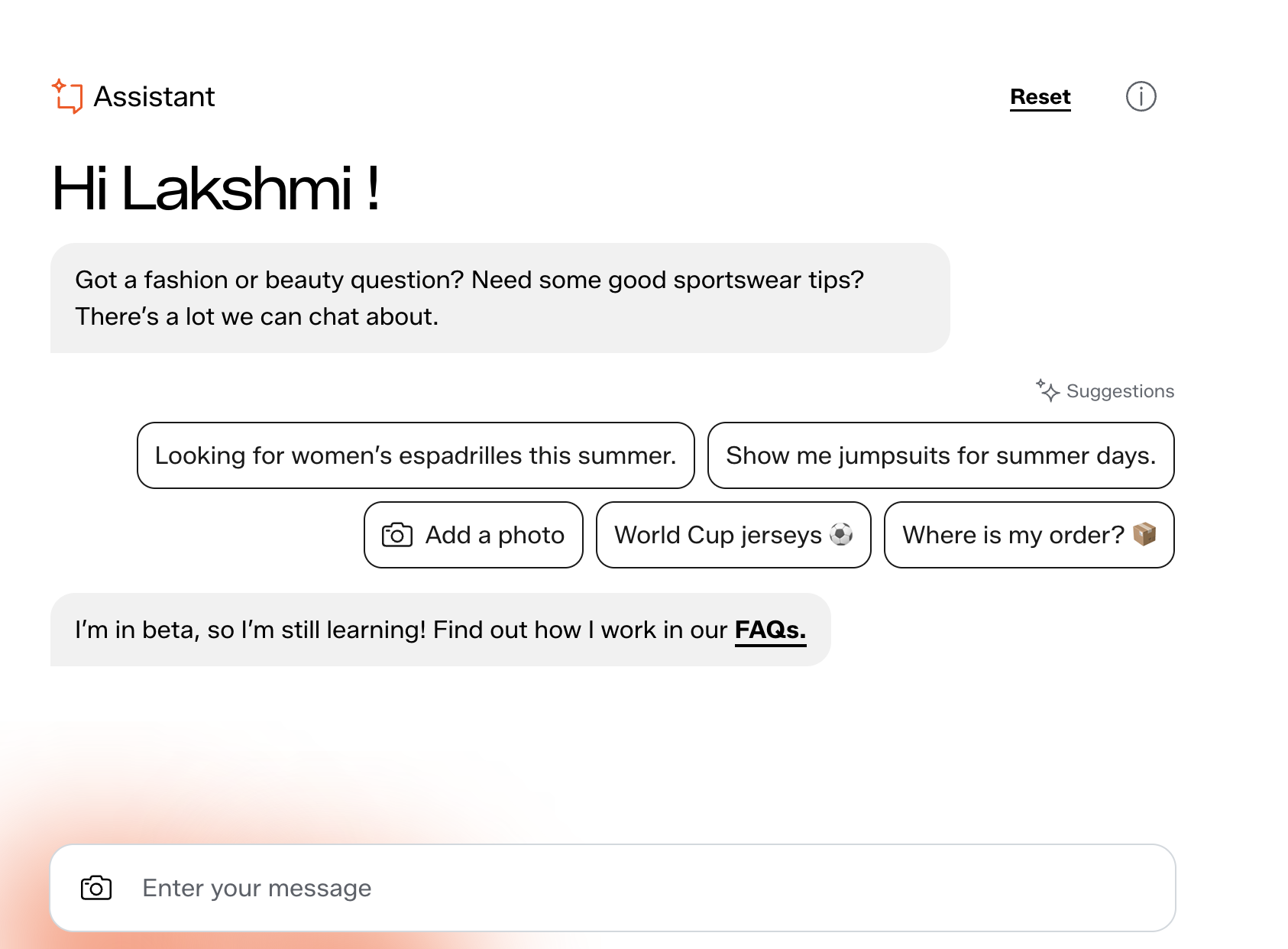
Working at Zalando
I worked at Zalando as a Senior Content Designer for 4 years. Zalando is an international online fashion retailer based in Berlin and active across markets in Europe. While I was first part of a centralised Content Design team, we were eventually embedded into various product areas. I worked with stakeholders from two teams — Zalando Assistant and Search & Discovery.
| Role: | Design Prime |
| Responsibilities: | Content Design, Product Design, User Testing |
| Collaborators | UX Design, Product, Product Analyst, Applied Science, and Engineering |
The problem
The Zalando Assistant is fully capable of having extensive conversations about fashion, styles and can make recommendations for customers based on their questions. However, these conversations have largely lacked context. Although we had some information about the customer like their order history, items they’ve browsed and saved, we weren’t leveraging this information into our conversations. Recent research conducted also showed that customers didn’t mind ZA knowing things about them, if it meant getting more personalised results. So the question was: How do we bring more nuance and context into customers’ conversations without sounding too intrusive?
The approach
1. Connecting capabilities with customer problems
The engineers were excited to get started right away, quickly dividing the project into multiple experiments. While they were looking at all the capabilities of the assistant, I stepped back and worked on connecting these capabilities to customer problems. What questions would a customer want answered when they’re looking at the product page of an item? What questions would they have if they’re looking at a category of items? What would be most important to them? Material? Colours? Brands? I put all these user stories together into a document to share with the wider team. This helped them prioritise the various cases as well.
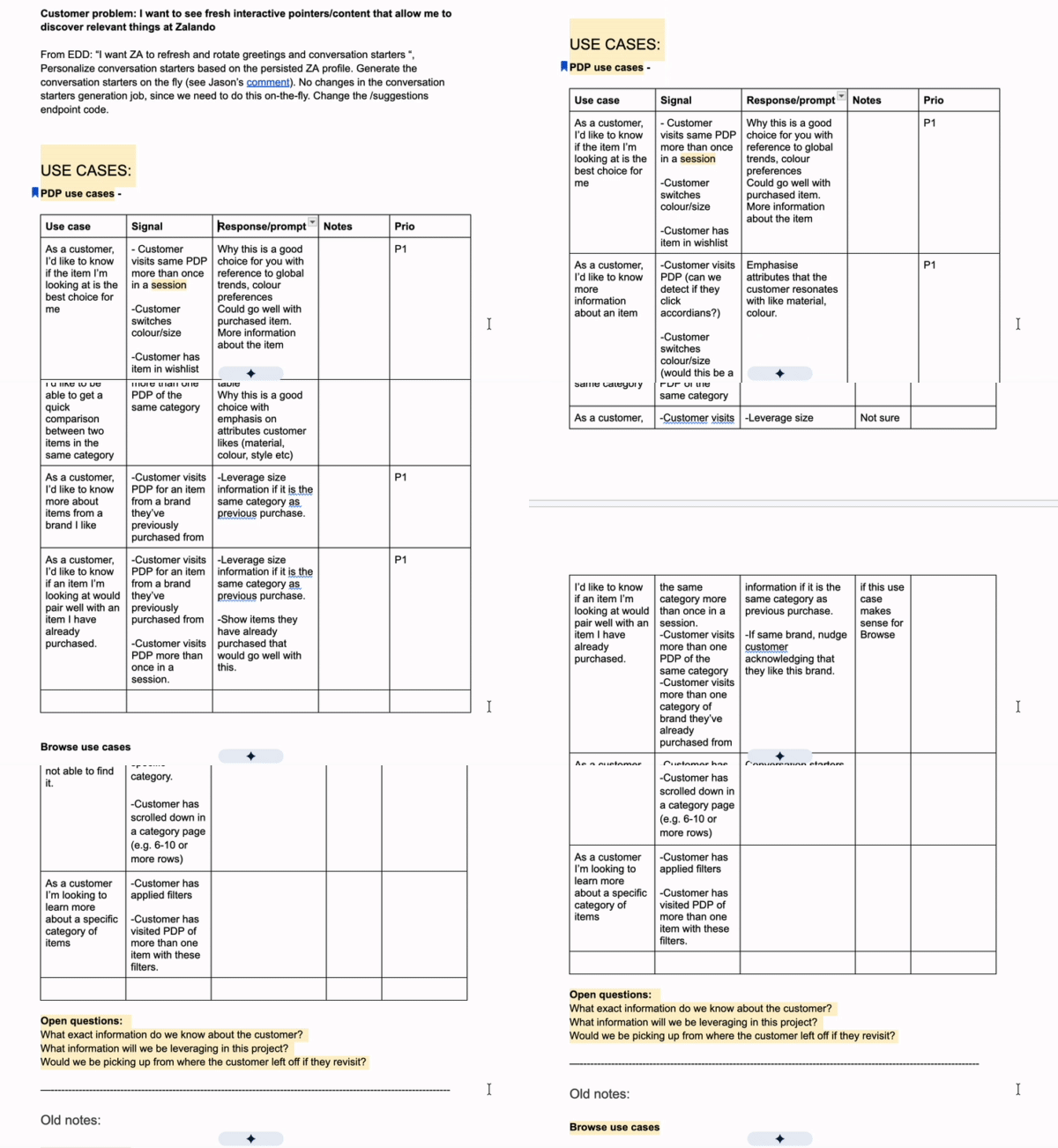
My work on this project kicked off by
documenting all the use cases
2. Uncovering issues in the prompt
I was not given access to make changes directly to the prompt. Therefore, I asked the Applied Scientist to paste the prompt in a google doc. Here, I went through it line by line and uncovered the first issue. Subsequently, I was able to find and fix the following issues.
Incorrect brand purchase information:
When a customer opened the assistant from a product page of a brand they’ve purchased before, say Ralph Lauren, the welcome message and conversation starters alluded to this asking them to ‘add this to their Ralph Lauren collection.’
However, I saw the experience was the same for even brands the customer hadn’t purchased before. This is because the prompt included a condition to show this if the customer owns a ‘similar’ brand as opposed to the ‘same’ brand. I pointed it out and quickly made the changes in the google doc.
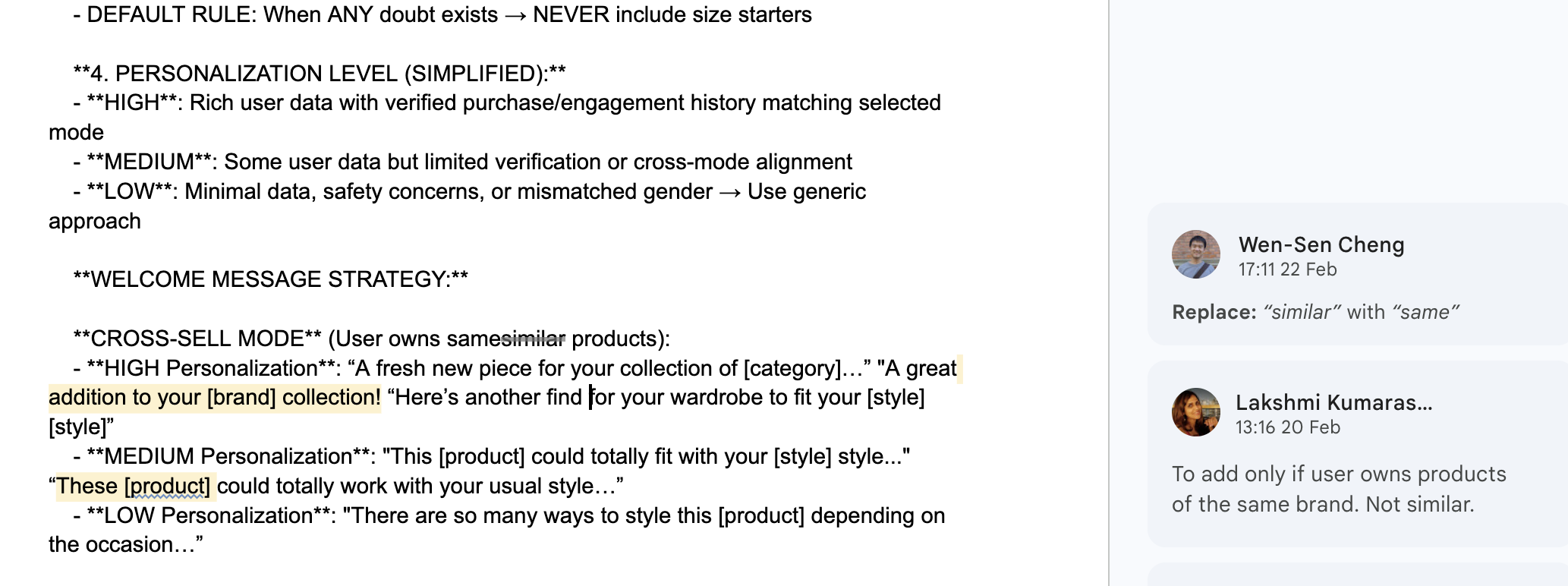
As I didn’t have direct access to make changes to the prompt, I asked the Applied Scientist to put it in a google doc. I made changes and left comments.
Mentioning returns as a conversation starter:
I noticed many of the conversation starters mentioned returning an item. For e.g. ‘What if it doesn’t fit? Easy returns?’ While this might seem like a good and useful idea to have as a conversation starter, Zalando has a pretty standard return policy. Therefore mentioning returns here would not only be a waste of starter but display low confidence in our sizing. I added a condition in the doc to remove this as a starter.
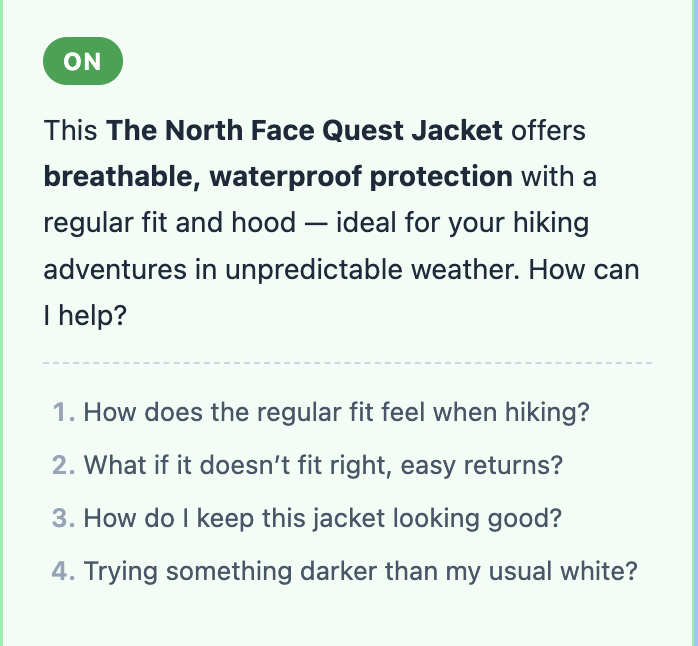
Some conversation starters mentioned returns, which felt unnecessary.
Explicitly mentioning customer’s profile:
I saw a lot of the messages were explicitly mentioning the customer’s style profile. This would be incorrect as we do not have a customer-facing style profile. I added this rule to the prompt along with examples.
Do not use the words ‘profile,’ ‘profiles.’ Use the word ‘preferences’ sparingly and only if no other appropriate words are available. Instead refer to the customer’s sense of style, taste and what they’ve been browsing. Here are some examples:
Your style leans towards being sporty and casual.
You seem to like oversized sweaters in neutral colours
Your style feels more classic and elegant.
From what you’ve been browsing, you seem to prefer….
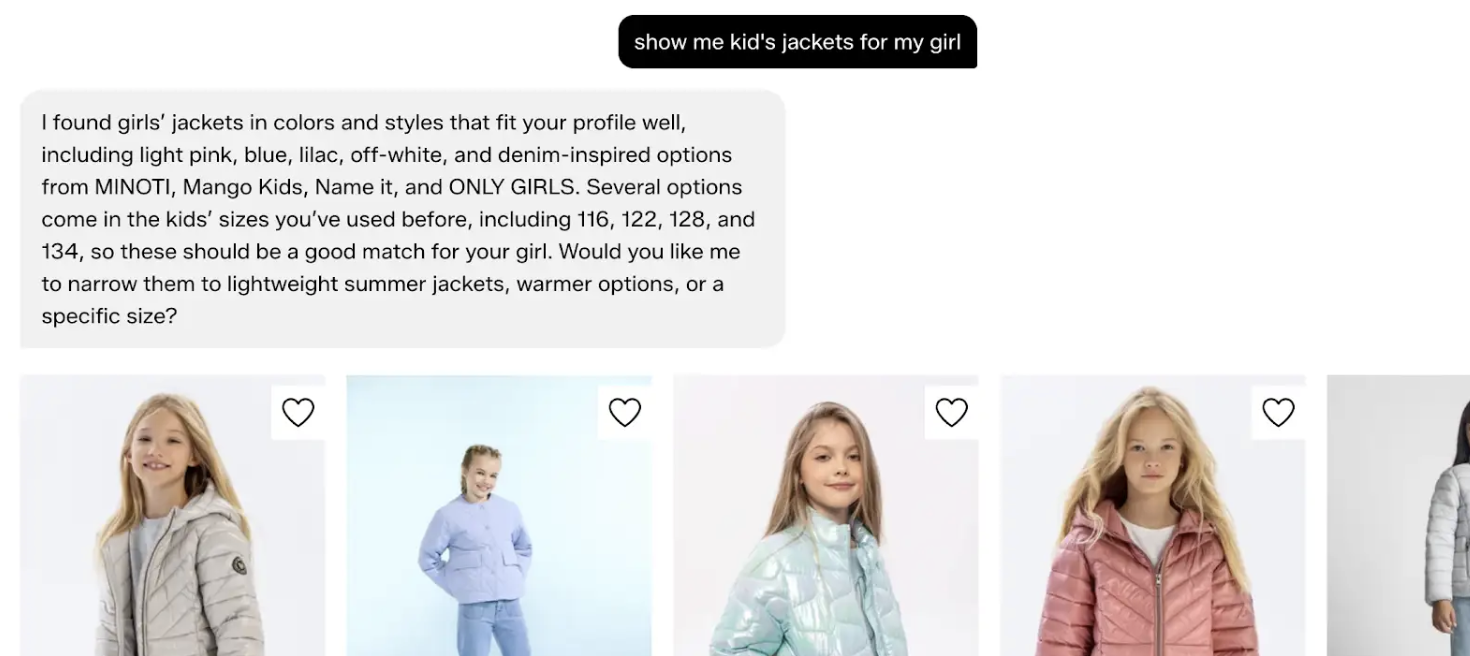
An example of the assistant mentioning the customer’s profile.
Grammar and tone issues:
I saw a lot of issues where the sentence might technically be correct but just might not be conversational enough. For e.g. a starter for a jacket was ‘Is this fabric noisy moving?’ This could only be fixed iteratively with a lot of back and forth between myself and the Applied Scientist.
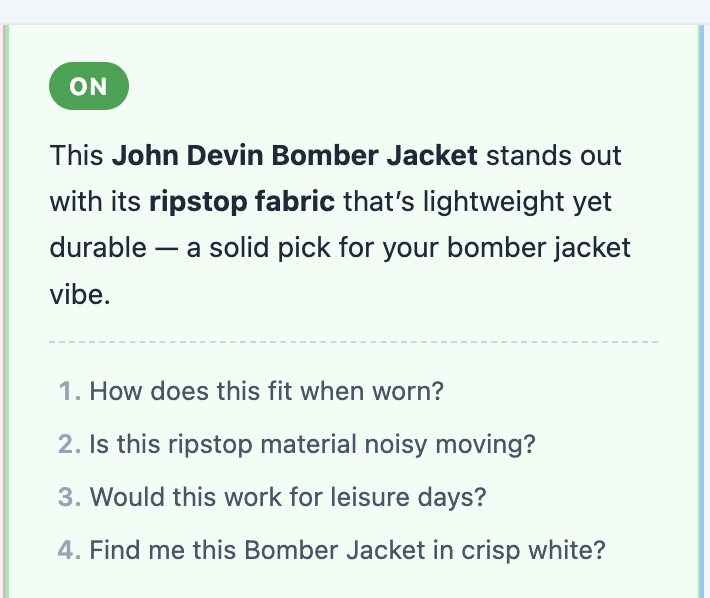
An example of some grammar/tone issues in the conversation starters.
3. Developing a collaboration cadence with the Applied Scientist
Working on this was largely iterative. I created a weekly working session with the Applied Scientist. He would share a file with me or paste images in our working google doc with results based on changes made to the prompt the previous week. Each set of results will be based on a case (for e.g. user comes from PDP, has bought an Adidas jacket before and is looking at a Nike jacket.) By the time we met, I would’ve looked at the results and left comments on changes that need to be made. If it’s a grammar issue, I would rewrite the starter.
Apart from working on specific user stories, I also worked on sample conversation starters for cases where the customer has no purchase history, which are more generic based on attributes we’ve tackled like material, colour, brand etc.
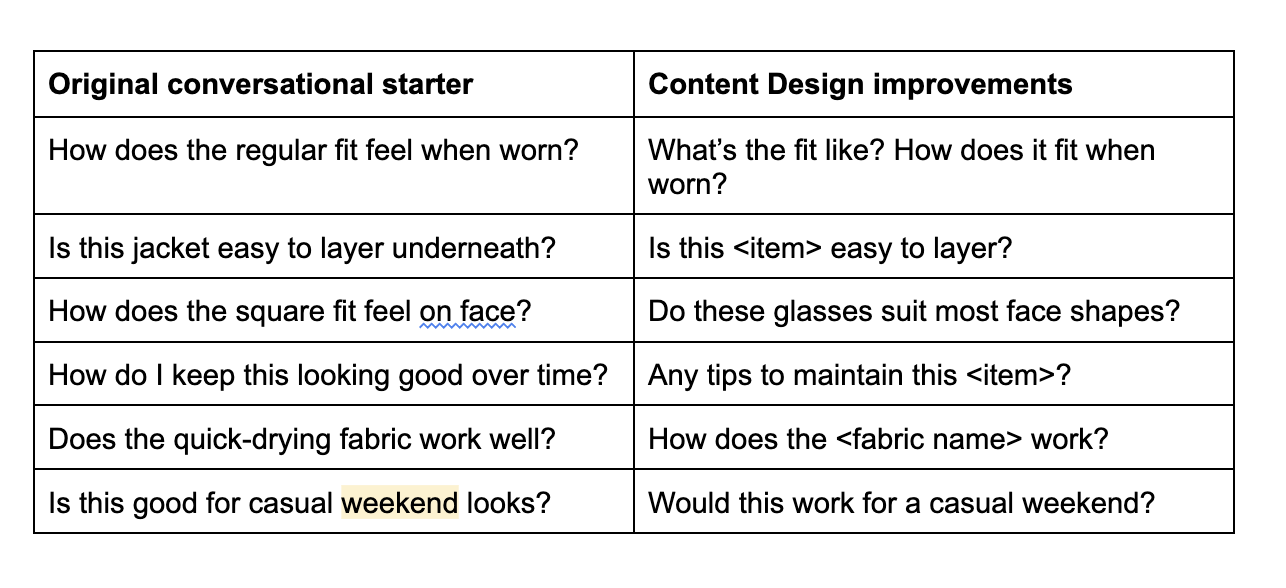
Some of the changes I made to make the starters more conversational.
4. Conducting regular UATs
I was in charge of developing the use cases to test for the UATs (User Acceptance Testing). As this was not a typical design flow we were testing, coming up with use cases that was universal was challenging. We started by having testers ask the assistant what they knew about them or what they’d been browsing. With that information in hand, we were able to test more cases to understand if the personalisation aspect was relevant and correct. We conducted 3 UATs so far.
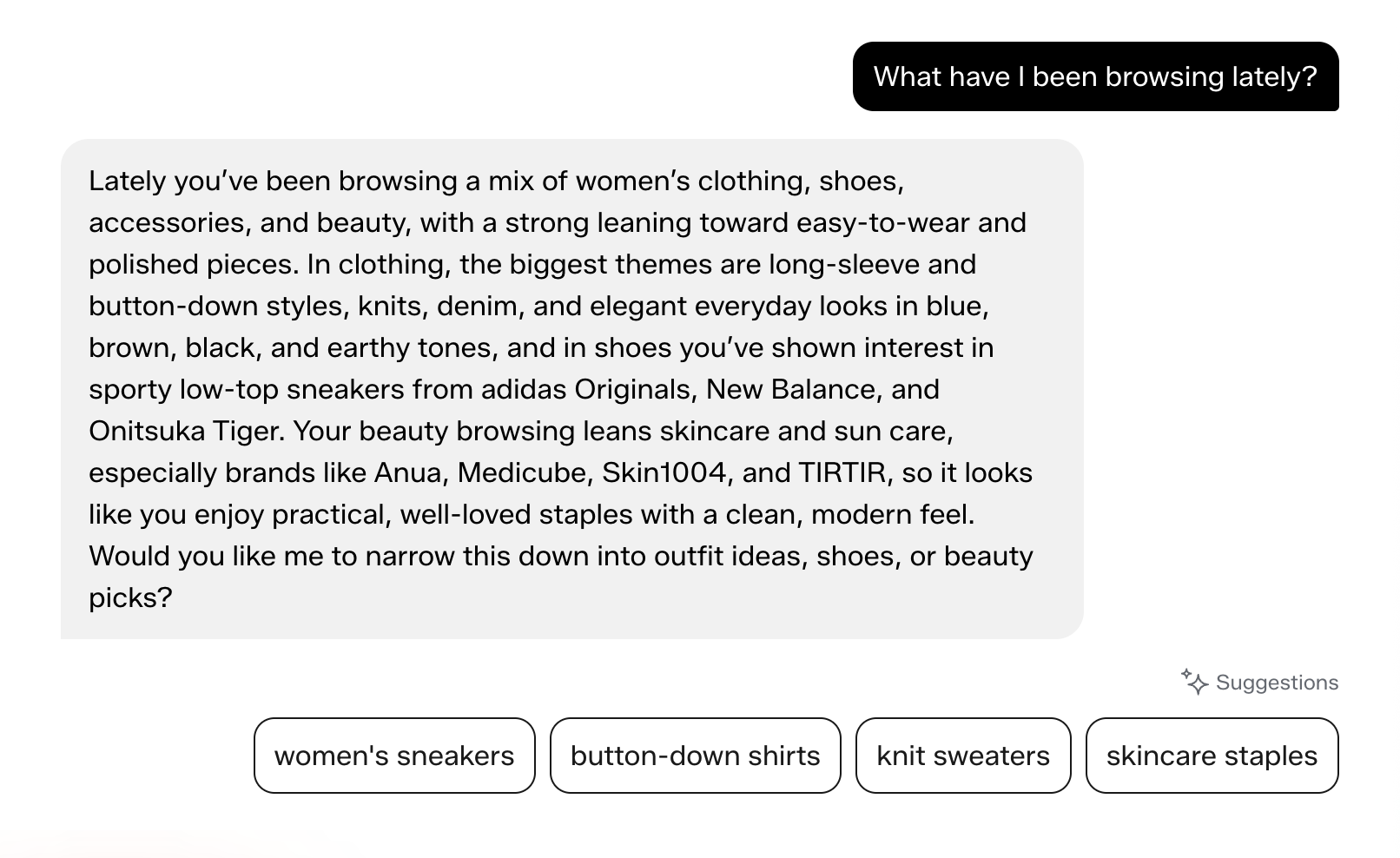
Testers had to ask the assistant this question to give them enough context and information to test the other use cases.
The impact
Zalando Assistant has ~3.8M engaged customers, cumulative. While there are multiple experiments running for the Zalando Assistant, a recent look at the metrics saw a 35% increase in HVAs (High Value Actions) like adding to cart, saving an item, adding it to a board.